Karuppu Tamil Movie Download
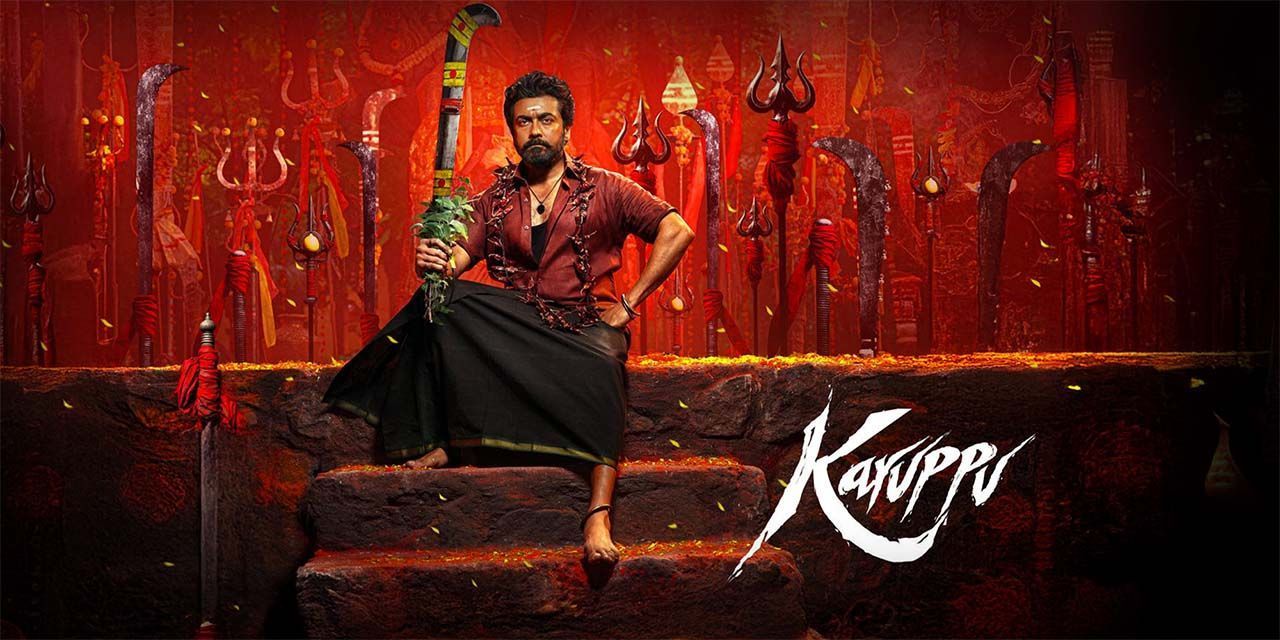
Karuppu Movie Synopsis: Karuppu takes human form as a lawyer to help a helpless father and his ailing daughter. But when a crafty opponent challenges him to win without divine powers, even God is forced to play by human rules. Karuppu Movie Review: Karuppu joins a long line of Indian films built around divine intervention in human lives, where God descends into the mortal world to confront forces so deeply unjust that they almost become a challenge to divinity itself. What sets Karuppu apart from films like Oh My God or Arai Enn 305-il Kadavul, however, is how unapologetically it frames this premise within a mass-masala template. Rather than approaching divinity through satire, philosophy or light-hearted fantasy alone, the film treats God as a full-fledged commercial hero figure — complete with punch dialogues, elevation moments and crowd-pleasing songs. That combination of courtroom drama, emotional stakes and “God-as-mass-hero” energy is precisely what gives the film its distinct flavour. What makes Karuppu initially engaging is how firmly it roots itself in the legal proceedings surrounding a stolen jewels case involving Indrans and Anagha Maaya Ravi, who play a helpless father and daughter. The first half spends considerable time building investment in their desperation, vulnerability and pursuit of justice, which in turn gives the film both its emotional core and its most effective mass-movie hook: the idea of an ordinary man challenging a God forced to live and behave as a mortal. We have Baby Kannan (RJ Balaji, in effective mode), a crafty lawyer who has gamed the system for so long that even the judge, Rajanayagam (Natty Subramaniam), appears to dance to his tunes. Even the one truthful lawyer in the courtroom, Preethi (Trisha Krishnan), struggles to win cases despite being able to prove malpractice. So, when Baby Kannan boldly challenges Vettai Karuppu (Suriya, in full aura-farming mode), the deity who descends to help the father-daughter duo, to win the case without resorting to divine powers, Karuppu finds genuine dramatic tension because the conflict feels rooted in human stakes rather than divine invincibility. But somewhere around the interval, the film abruptly abandons these characters and their emotional arc. In fact, even after the death of a crucial character, the narrative seems far more interested in racing towards its next hero-elevation moment (powered by GK Vishnu's oversaturated frames) — and the next case, involving a sexual assault survivor played by Sshivada — than allowing the audience to sit with the emotional weight of the loss. The father-daughter duo are reduced to a fleeting glimpse towards the end, with everything eventually explained away through vague “just God things” logic. Meanwhile, the sexual assault case functions largely as a marker that the film has now entered full “God mode” territory, complete with a Liar Liar-style sequence played mostly for laughs. From there on, the writing slips into anything-goes mode, with scenes that jar with the film’s own internal and emotional logic, relying primarily on Suriya’s star presence and Sai Abhyankkar’s energetic score to deliver the mass highs. After the first half’s feels mode, director RJ Balaji appears so occupied with piling on fan-service moments that the second half turns into full-blown Reels mode, and the film gradually loses focus. As long as it sticks to “just court things”, Karuppu works. But once it goes all out “just God things”, the film swaps human emotion for divine spectacle — and emerges less powerful for it.